Budget-friendly food resilience: stretching dollars and building security
Strategies for households to manage grocery costs, build a resilient pantry, and reduce food waste while maintaining nutrition.
We can't find the internet
Attempting to reconnect
Something went wrong!
Hang in there while we get back on track
Build budget resilience and light food security through smart shopping, basic food storage, and small-scale growing to stretch your grocery dollars further.
Essential items and supplies you'll need to be ready for this scenario.
Recommended: 2-4 L per person per day
Food-grade water storage container for emergency supply
Supports low-cost bulk water storage as part of pantry planning.
Recommended: 1 backup treatment pack
Chemical water treatment tablets for purifying questionable water sources in emergency situations.
Low-cost emergency backup for short-term water disruptions.
Recommended: 3-day buffer per household member
Long-term storage food bars designed for emergency situations and disaster preparedness.
Immediate calorie buffer to absorb price and supply shocks.
Recommended: 1 reliable manual opener
Hand-operated can opener for food access without power
Ensures shelf-stable food access even during outages.
Recommended: 1 lantern per household
Battery-powered LED lantern for area lighting during outages
Extends safe food prep and storage checks during outages.
Recommended: 1 per household
High-capacity portable charger for phones and devices
Maintains phone access for budget tracking and emergency comms.
Recommended: 1 per household
NOAA weather alert radio with multiple power options
Monitors severe-weather alerts that can disrupt food distribution.
Recommended: 1 compact multi-tool
Versatile tool combining knife, pliers, screwdrivers, and other essential tools in one compact device.
Supports low-cost packaging, prep, and minor household fixes.
Essential knowledge and expert guidance to help you understand and prepare.
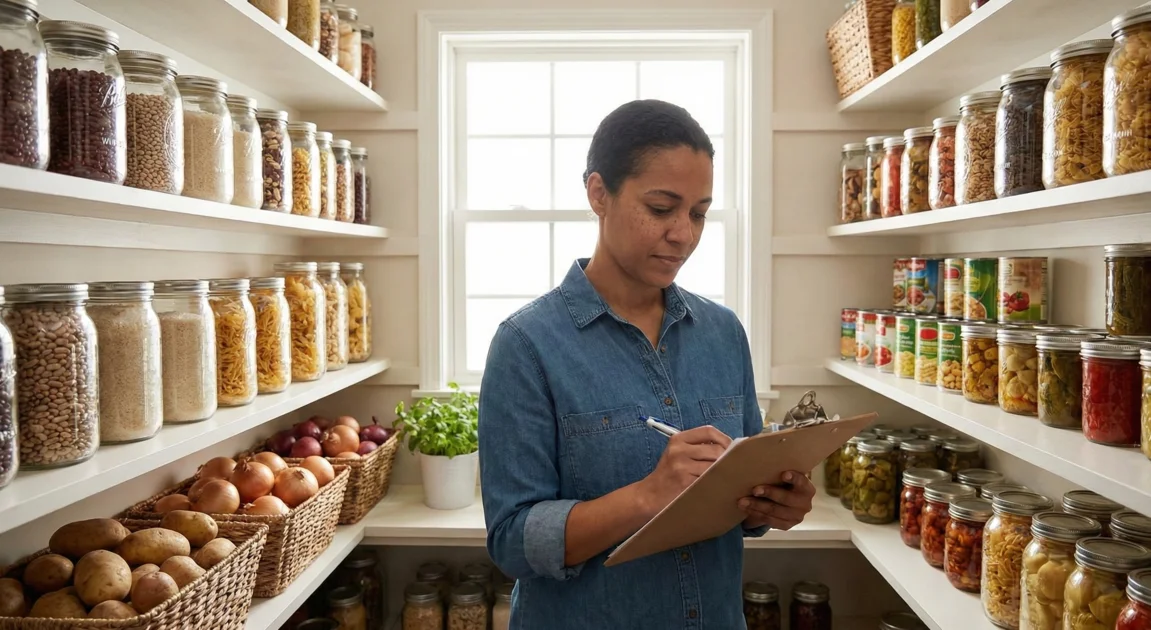
Strategies for households to manage grocery costs, build a resilient pantry, and reduce food waste while maintaining nutrition.
Instructions for households to grow herbs and vegetables in small spaces using containers, with advice on plant selection, care and equipment.
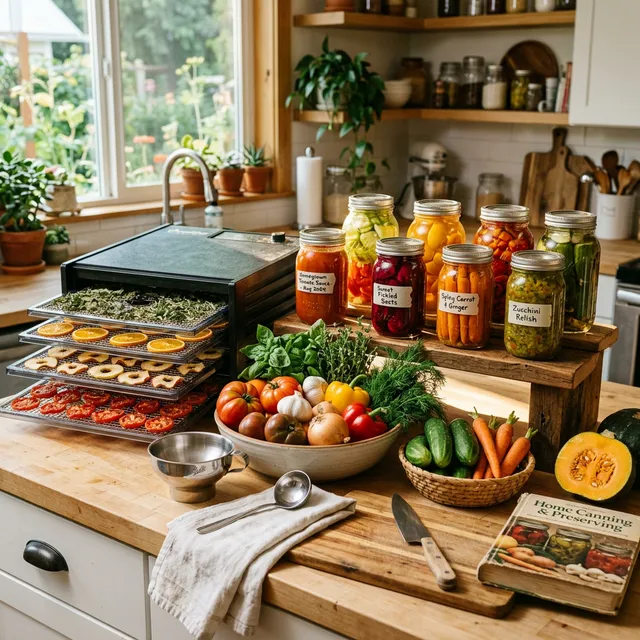
Learn safe methods for canning, freezing, dehydrating and fermenting foods at home. This guide covers equipment, procedures and storage tips so you can preserve seasonal produce and build food resilience.
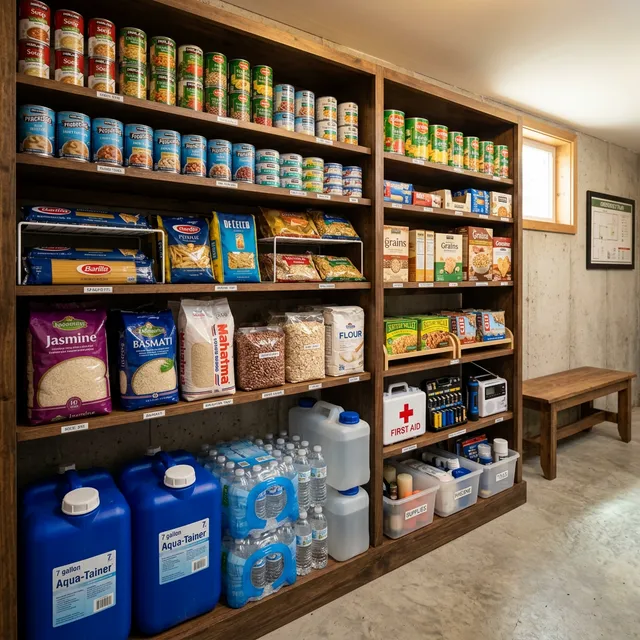
Practical advice for building a resilient pantry that keeps your household fed during disruptions. Learn how to stock, store and rotate shelf‑stable foods and water for at least 72 hours and beyond.
Build your supply list and learn from our expert articles to be prepared.